
Why (and how) I read
Did you know there was a book about how to read books? It's called "How to read a book" and I've been trying to read it for several years now but, to be honest, it's a little dry 😅.

That said, the parts that I have read have changed how I read books in a positive way. Given all the reading I've been doing for my personal curriculum, I'm often asked how I read in a way where I actually retain the information.
So, as a followup to when I wrote about why and how I write, here I'll share the same for reading.
Why I read
I think most of us nowadays relate to the feeling of our attention spans dwindling and it feeling like it's so much harder to focus on longer-form content like books. This is also definitely one of the reasons I try to make myself read, to retain the ability.
But the primary reason I read is because I haven't yet found a format that grants me the depth of understanding on a topic as much as reading even just one book on it. There is certainly still a place for other formats - documentaries, articles, even social media videos that give a personal perspective - but I find that I haven't been able to replace the value and knowledge I gain from reading a literal book.
How I read
In the book, "How to read a book", the author discusses four types of reading:
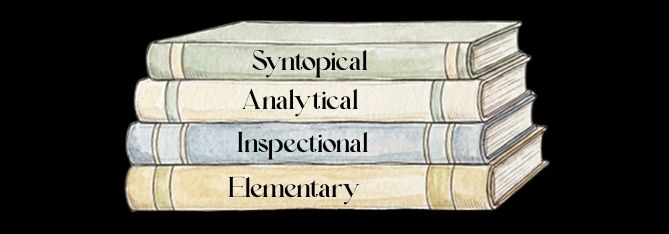
At the Elementary level of reading, we as the reader are just trying to understand what the author is literally saying in the simplest sense. It's being able to comprehend the words themselves.
At the Inspectional level of reading, we want to have a relatively superficial understanding of what the book is about. It's essentially the level of reading if you were to very quickly skim a book.
The third level, Analytical reading, is where we want to gain a complete understanding of the book, and form our own opinions on its contents.
Finally, at the Syntopical level of reading, we read comparatively. It's no longer about digesting and understanding this one book, but being able to put the book into context of writing.
As I mentioned, I never actually finished this book, but my biggest takeaway from it was how to do analytical reading. And it's informed how I go about reading today.
1. "What" and "why"
Before reading a book, it's important to understand what sort of book I'm reading and why I want to read it, as this impacts how I go about reading.
For example, I've recently been listening to a lot of fiction audiobooks. For these, there is quite literally nothing else I do besides just listen when I feel like it. I choose the format of audio because it's something I can do while doing other things, so there's little more intentionality to it than that.
But if I'm reading a non-fiction book for the purpose of learning something new, things are entirely different. And that's where I go to the next step…
2. Pre-reading
This is basically the second level of reading we discussed, inspectional reading. This can be as simple as going through the table of contents and flipping through the chapters. Doing this very broad skim of the book helps put each chapter I read into the broader context.
3. Annotating
Then, when I set out to read, I mark up the book itself as I go through. I'm a firm believer in making a book my own, so I have no issues with leaving it "damaged".
Over time I've become more thorough with my annotations. I essentially underline anything I think is important to the development of the story. My purpose here is that if I were to revisit this book, I could essentially just re-read the parts I've underlined and understand the main contents of the book. So I'm very liberal with this.

Annotations from Soldiers of Fortune by Max Siollun
Then I use a secondary form of annotation, e.g. highlighting, to mark up parts of the book that make me think - whether it's an important new thing I learned, or an opinion of the author I thought was important.
4. Chapter summaries
This part I have a love/hate relationship with. But I try to, at the end of each chapter, write out a short summary of the main points. Again, this is a way for me to reference the book without having to actually open it back up. It's like taking the underlined parts and further condensing them into a shorter summary.

Chapter summary of Nigeria's Soldiers of Fortune by Max Siollun
I'm not gonna lie, this part can be really boring to do. However, I find it so invaluable that I continue to do it anyway.
5. Book summaries
This part I don't always do, but is also valuable. After I complete a book, jotting down my general thoughts on what I learned and what my takeaways are. And also importantly, any resources mentioned in the book I should look into for further reading.
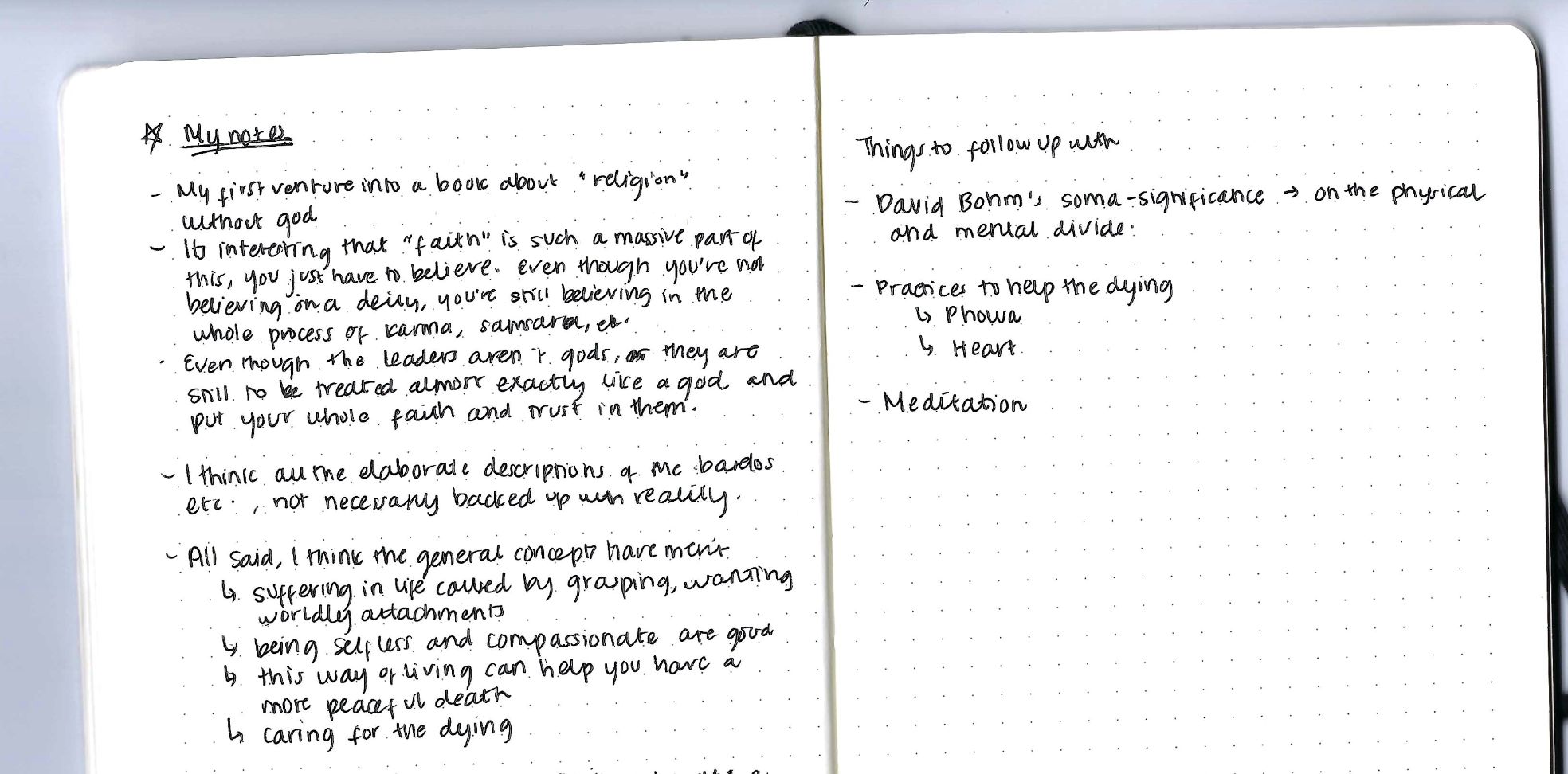
Summary of The Tibetan Book of Living and Dying by Sogyal Rinpoche
This act of going over the book contents several times - from the first inspectional skim, to writing the chapter and book summaries - really helps with reinforcing and retaining the information.